Reconstructing Biodiversity Since the Last Ice Age
Published:October 2024
A multi-proxy investigation into the timing and causes of biodiversity shifts since the Last Glacial-Interglacial Transition in southwest Ireland
I have been very generously funded in this project by a Taighde Éireann (Research Ireland) grant for the four year duration of this work.
A lake, a catchment, and 16,000 years of ecological change
The aim of this project is simple to state, but ambitious to carry out: to understand how biodiversity has changed since the last ice age, and how those changes were shaped by climate, landscape change, and people.
The focus is a lake catchment in West Cork. Lake sediments build up slowly, layer by layer, and those layers preserve evidence of past environments. By recovering and analysing a long sediment core, it becomes possible to reconstruct ecological change through thousands of years.
This site is particularly important because the sediment appears to preserve a continuous record from the present back to the end of the last glacial period, around 16,000 years ago. That makes it an unusually valuable archive for understanding long-term biodiversity change in Ireland.
Why Look Back?
When we talk about biodiversity today, we are usually talking about a snapshot: what species are present now, and how abundant they are. But ecosystems have histories. They form, change, reorganise, and sometimes decline over long periods of time.
This project asks how biodiversity developed after the ice age, how quickly plants and animals established themselves in southwest Ireland, how ecosystems responded to major climate fluctuations, and what role human activity may have played later on.
Some of the key questions are:
- How did biodiversity respond to climate change over the last 16,000 years?
- How quickly did life establish after the ice age and after later cold phases?
- When did biodiversity peak?
- What role did early human settlement play?
- How does present-day biodiversity compare with reconstructed past biodiversity?
- Can we detect the timing and rate of biodiversity loss?
Reading the Archive in the Sediment
The project uses a palaeoecological approach. This means using remains preserved in sediment to reconstruct past environments.
Traditional fossil evidence remains central. Pollen tells us about vegetation. Chironomids can be used to infer summer temperature. Testate amoebae can help reconstruct hydrological change. Other biological remains, such as plant macrofossils and non-pollen palynomorphs, can add further detail.
Alongside these conventional methods, the project will use sedimentary ancient DNA, or sedaDNA. This involves extracting DNA preserved in sediment and using it to identify organisms that were present in the catchment or lake environment at different times.
This is powerful because not all organisms preserve well as visible fossils. DNA can potentially reveal plants, animals, fungi, and microscopic organisms that may otherwise be missed.
Why Use More Than One Method?
No single method gives a complete picture. Pollen, macrofossils, chironomids, testate amoebae and sedaDNA all record different parts of the environment, and each has its own strengths and limitations.
For example, pollen may show a strong regional vegetation signal, while sedaDNA may reveal a more local or different botanical presence. The aim is not to choose one method over another, but to compare them and use them together.
This integrated approach should allow a fuller reconstruction of past biodiversity than any one method could provide on its own.
The Sites
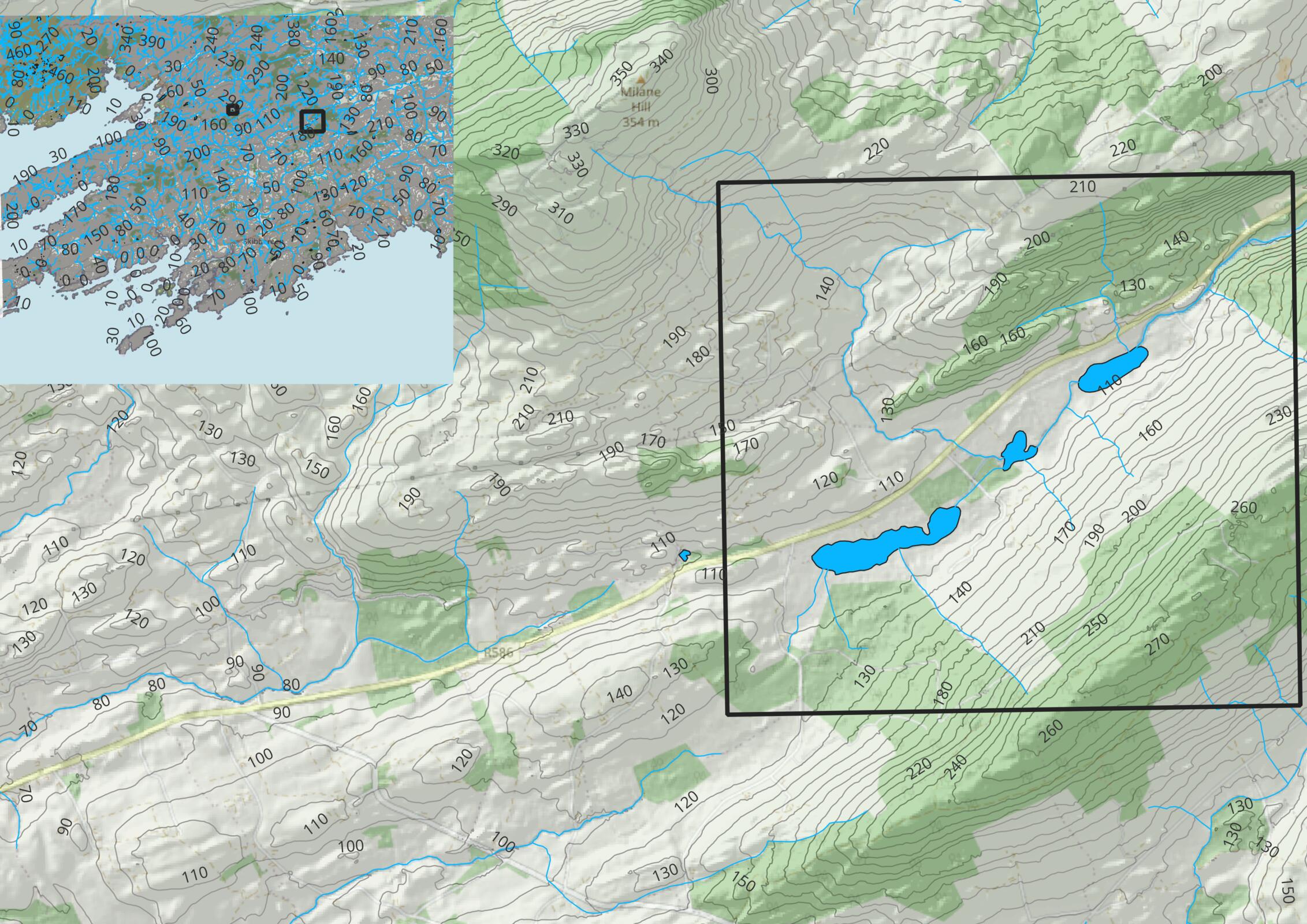
The location of the Three Lakes site in West Cork, in south west Ireland.
The main focus will be a lowland lake, the middle lake at Three Lakes, between Dunmanway and Drimoleague, in West Cork. At around 100 m above sea level, surrounded by peatland, this lake will provide the main record of biodiversity and catchment change.
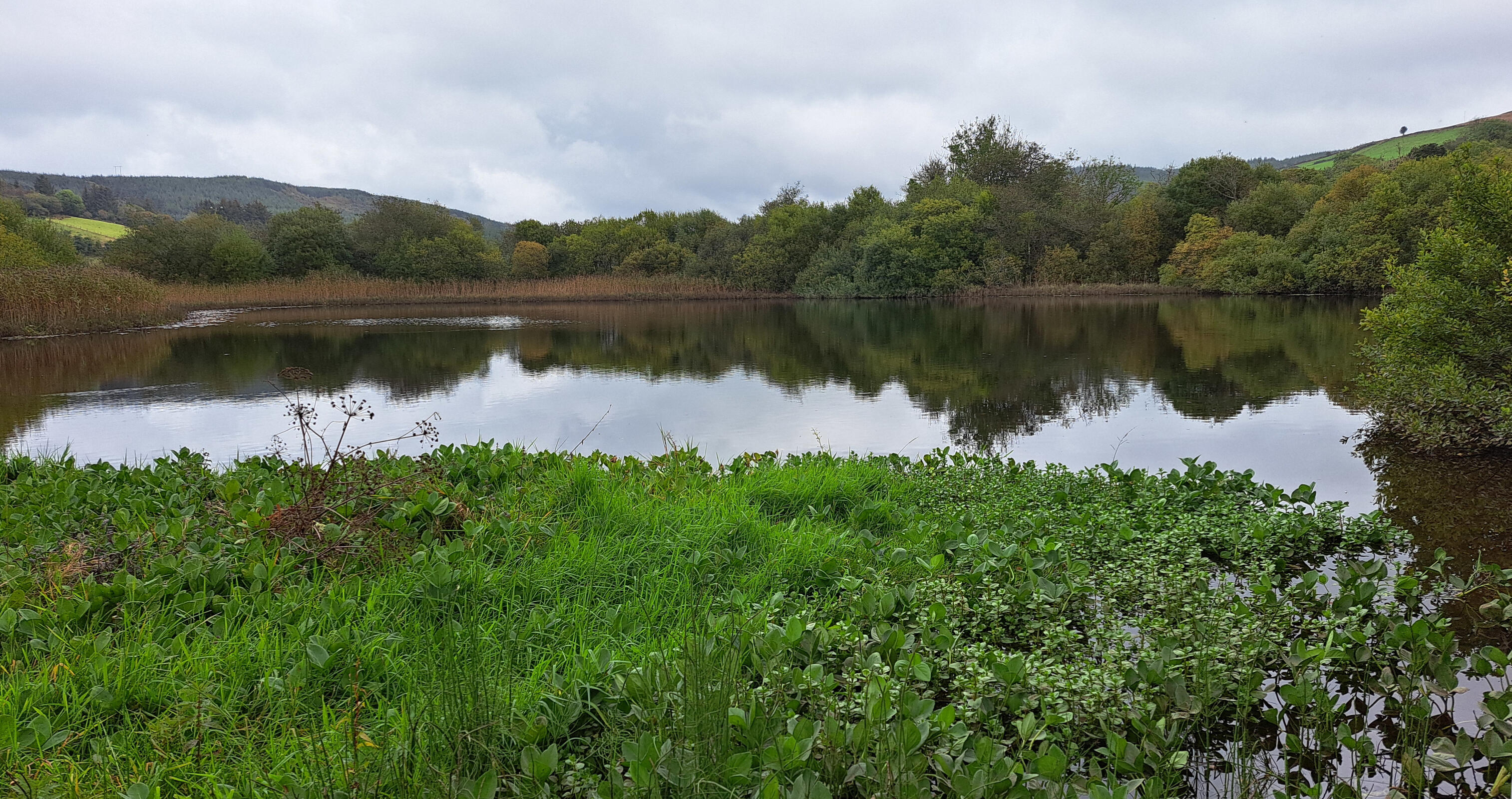
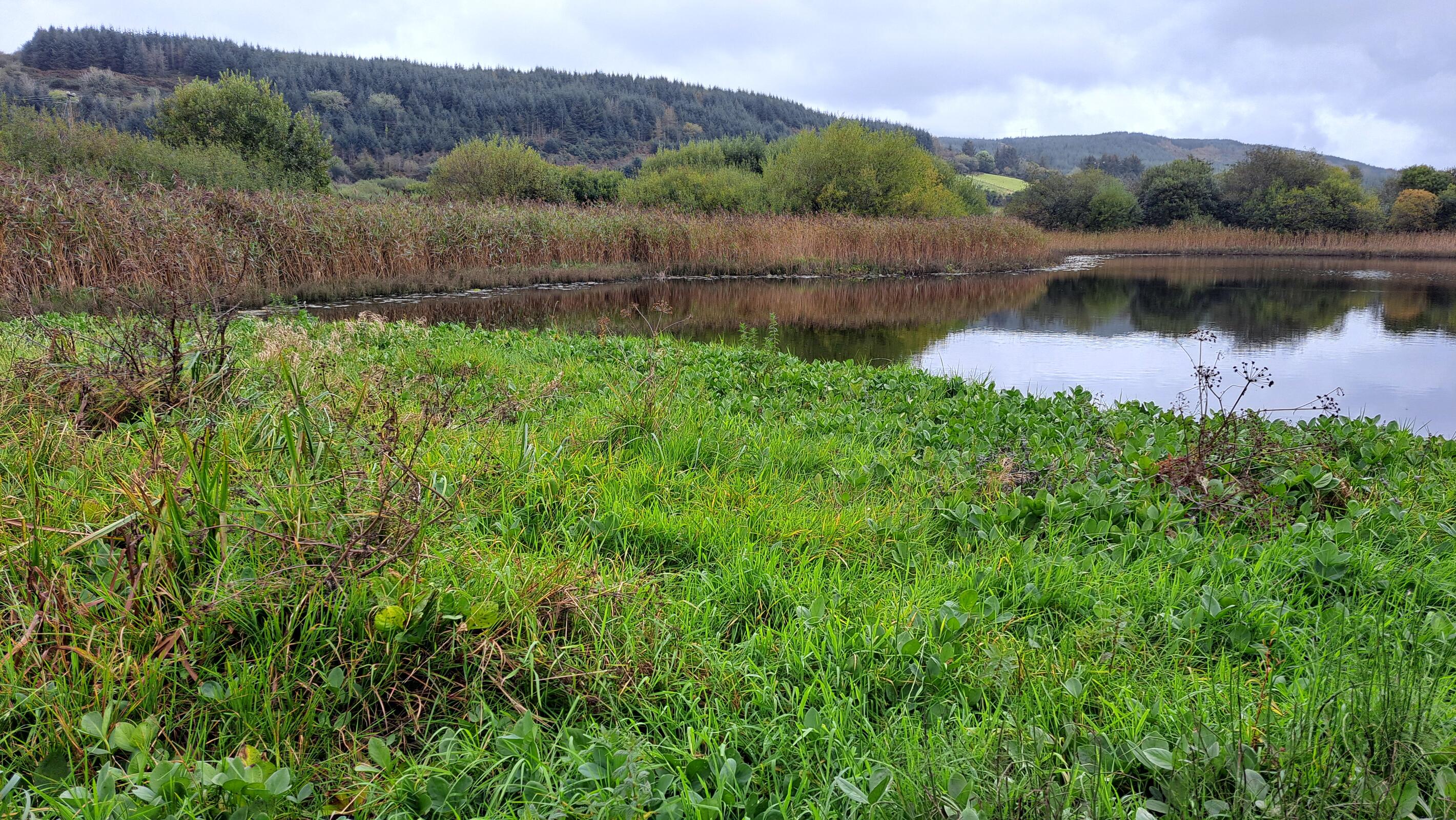
The middle lake at Three lakes (left), and the northern reed bounded shore of the middle lake (right).
A nearby higher elevation lake will also be examined, primarily to reconstruct chironomid-inferred summer temperature during the Holocene. The peatland at Three Lakes will be used to reconstruct hydrological changes using testate amoebae. These aspects of palaeoecology will be explored and explained in a later post.
The Sites

The location of the Glandart lake site in West Cork, in south west Ireland.
Together, these records will allow changes in biodiversity, temperature, hydrology and vegetation to be compared through time.
Building the Timeline
A reliable chronology is essential. Without it, we cannot say when changes happened, how quickly they occurred, or whether different changes were connected.
The timeline will be built using radiocarbon dating, tephrochronology (ancient volcanic ash deposits found in the sediment), and recent dating methods such as 210Pb and 137Cs for the last century or so. Where possible, samples from different cores will be matched chronologically so that environmental changes can be compared across sites. I will explore the finer aspects of radiocarbon dating in a later post.
From Species Lists to Ecological Change
The final stage is to bring the evidence together. The taxa identified through sedaDNA will be compared with those identified through conventional fossil analysis. Environmental changes inferred from the different proxies will then be examined alongside biodiversity changes.
The aim is not simply to produce lists of species. The aim is to understand how biodiversity changed, how fast ecosystems responded, and what drove those changes.
Why West Cork?
West Cork has received relatively little attention in palaeoenvironmental research, despite its ecological and landscape complexity. This project therefore addresses a regional gap, while also contributing to wider questions about biodiversity change, climate, and human impact. As part of this project I undertake a scoping review of previous palaeoecological studies that have been undertaken on the island of Ireland, and we will see the gaps and concentrations in time and across the island.
Only a small number of Irish palaeoecological studies have so far used sedimentary ancient DNA. By combining sedaDNA with conventional fossil methods at a site with a long continuous record, this project aims to produce a more complete account of biodiversity change in southwest Ireland since the last ice age.
A Starting Point
The most important starting point is to remember that when Ireland was covered in an ice sheet, that was as much as 1 km thick and reached from the edge of the continental shelf in the west, and which joined up with the British Ice Sheet across the Irish Sea to the east, there were no living things on the face of Ireland. No plants, no animals, no insects, no microbiota, algae, or lichens - nothing. So when the ice left, how did all the living things colonise the bare gravels, rocky hills, and rushing meltwaters? In what sequence did they return? Were they successful, how did they fare? Twenty thousand years of success, failure, death, birth, and growth. Twenty thousand years to form a fertile soil, placid lakes, verdant woodlands, wild moorland, expansive peatlands, and a rugged coastline.
This blog will follow the project as it develops: the fieldwork, the core sampling, the laboratory work, the frustrations, the methods, and the discoveries. Some posts will be technical, others more reflective. But the central question remains the same throughout:
what lived here, how did it change, and why?