Unexpected Life in Late Glacial Sediments
Published: February 2026
Exploring the smallest traces of life preserved in late glacial lake sediments.
Late glacial sediments often contain only sparse and fragmentary biological material, yet these micro-remains can provide valuable insights into past environments and ecological change.
What remains when plant macrofossils are scarce
While searching for terrestrial plant macrofossils suitable for radiocarbon dating, I encountered a different set of biological remains that offer insight into Late Glacial environments.
Non Pollen Palynomorphs - NPPs
Palynology - 'the study of dust like samples' - is the name given to the study specifically of pollen and spores. So palynomorphs are those things that look like pollen and spores, and non-pollen palynomorphs are those things that look like pollen and spores, but aren't. When researchers spend hours scanning microscope slides and sample dishes they repeatedly see the same things. Sometimes the focus is so strongly on whatever is being examined or searched for - pollen, or diatoms, testate amoebae or chironomids, that these other things are ignored. But sometimes our curiosity is piqued, and we follow them up, and try to identify them. Whatever they turn out to be, they represent living organisms from the period beinge xamined, and can contribute to our understanding of the environment at that time.
Absence of Sphagnum
No sphagnum moss remains have yet been observed in sediments below the Younger Dryas (~11,700 BP), despite their abundance above this boundary.
This suggests environmental conditions at this site were unsuitable for sphagnum during the Late Glacial, possibly reflecting hydrology, temperature, or ecological succession.
Bryozoan Statoblasts
Large numbers of Cristatella mucedo statoblasts were present.
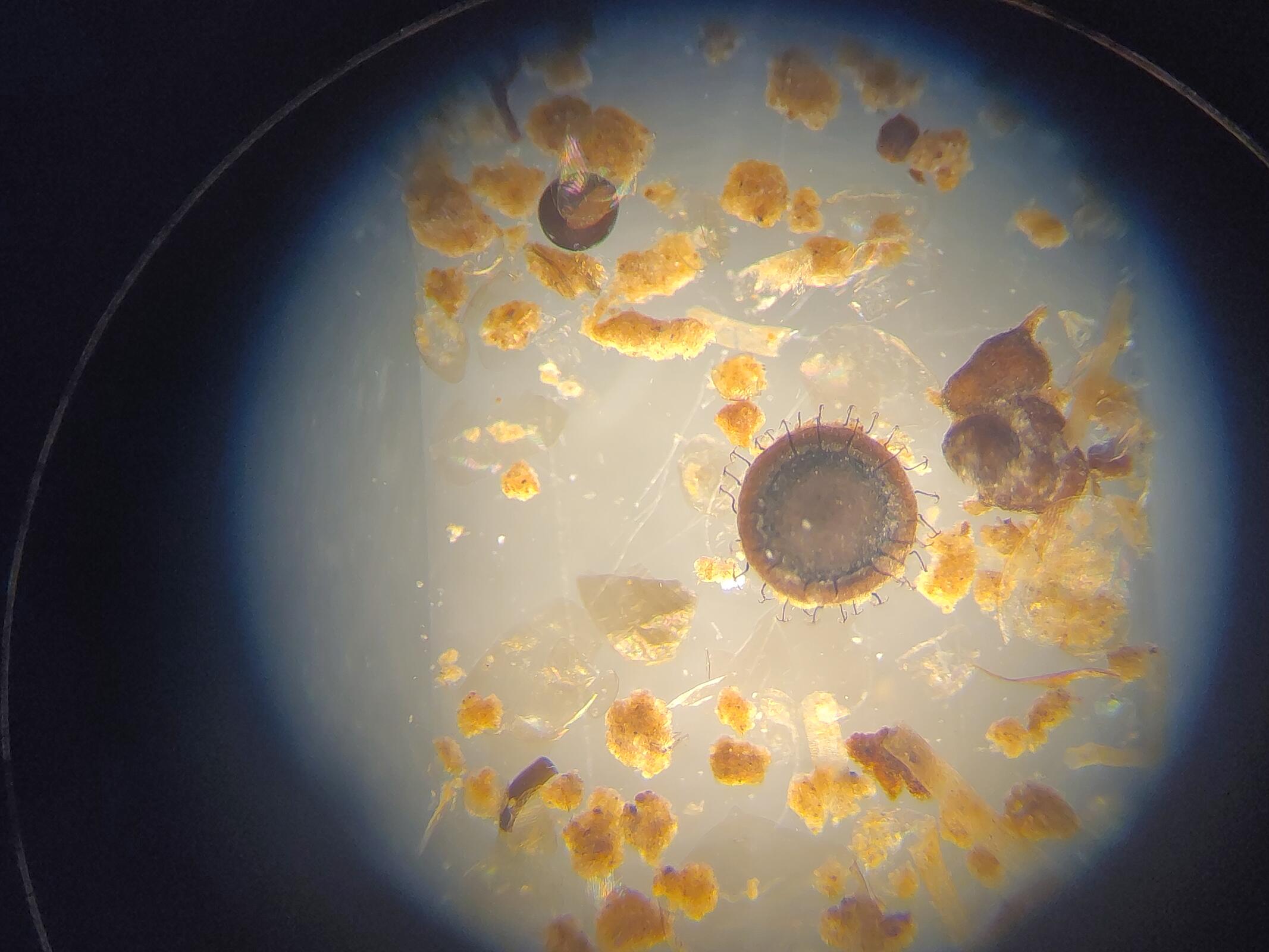
The distinctive statoblasts - similar in idea to seeds of plants - of the freshwater bryozoa Cristatella mucedo.
Bryozoans are freshwater colonial organisms, and their statoblasts act as reproductive units. Their abundance raises questions about environmental conditions in the lake at that time.
- temperature
- nutrient levels
- light availability
- lake size and depth
At this time, the site likely formed a larger lake than exists today.
Chara Oospores
Chara oospores were also abundant. These distinctive structures indicate the presence of stonewort algae.
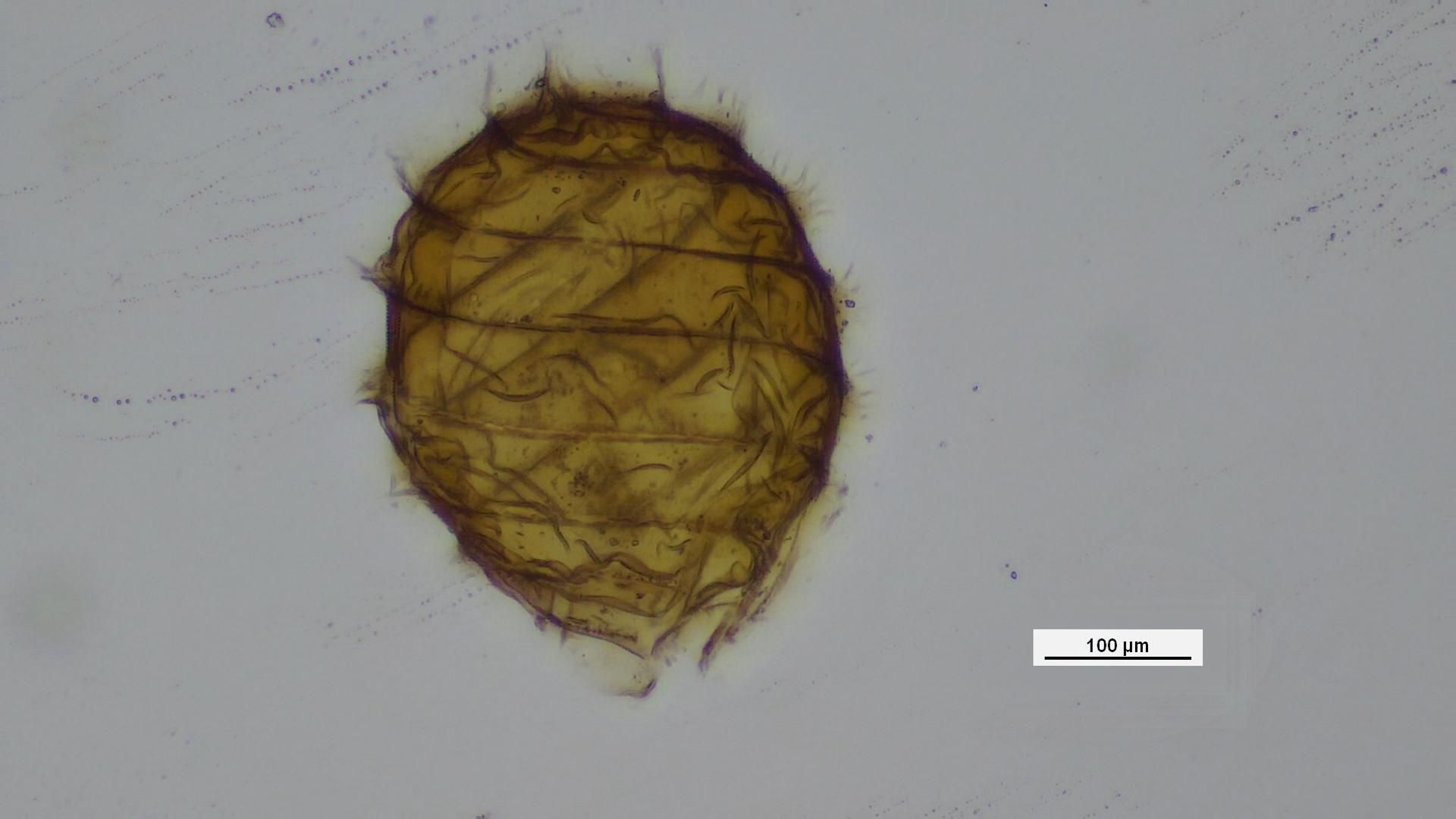
An oospore of the freshwater plant-like alga Chara - Stonewort.
These oospores are sometimes coated with calcite crystals, presumably a system of protection that the alga has developed. But in the absence of available calcium, as here in West Cork, this rarely happens. There may be some small amount of calcium in the water from glacial deposits that contain limestone, that have been transported into the are by ice.
What These Remains Represent
These organisms represent non-pollen palynomorphs (NPPs) or broader biological proxies. Although not originally the target of this work, they provide valuable insight into past environmental conditions.
Other Remains
Inevitably there are remains of a great variety of plants and animals of larger size than we generally take notice of. Here are a few. If we could identify these this could give us some view into late glacial life in West Cork... When we get the DNA analysis done, we may be able to match these remains to a DNA presence.
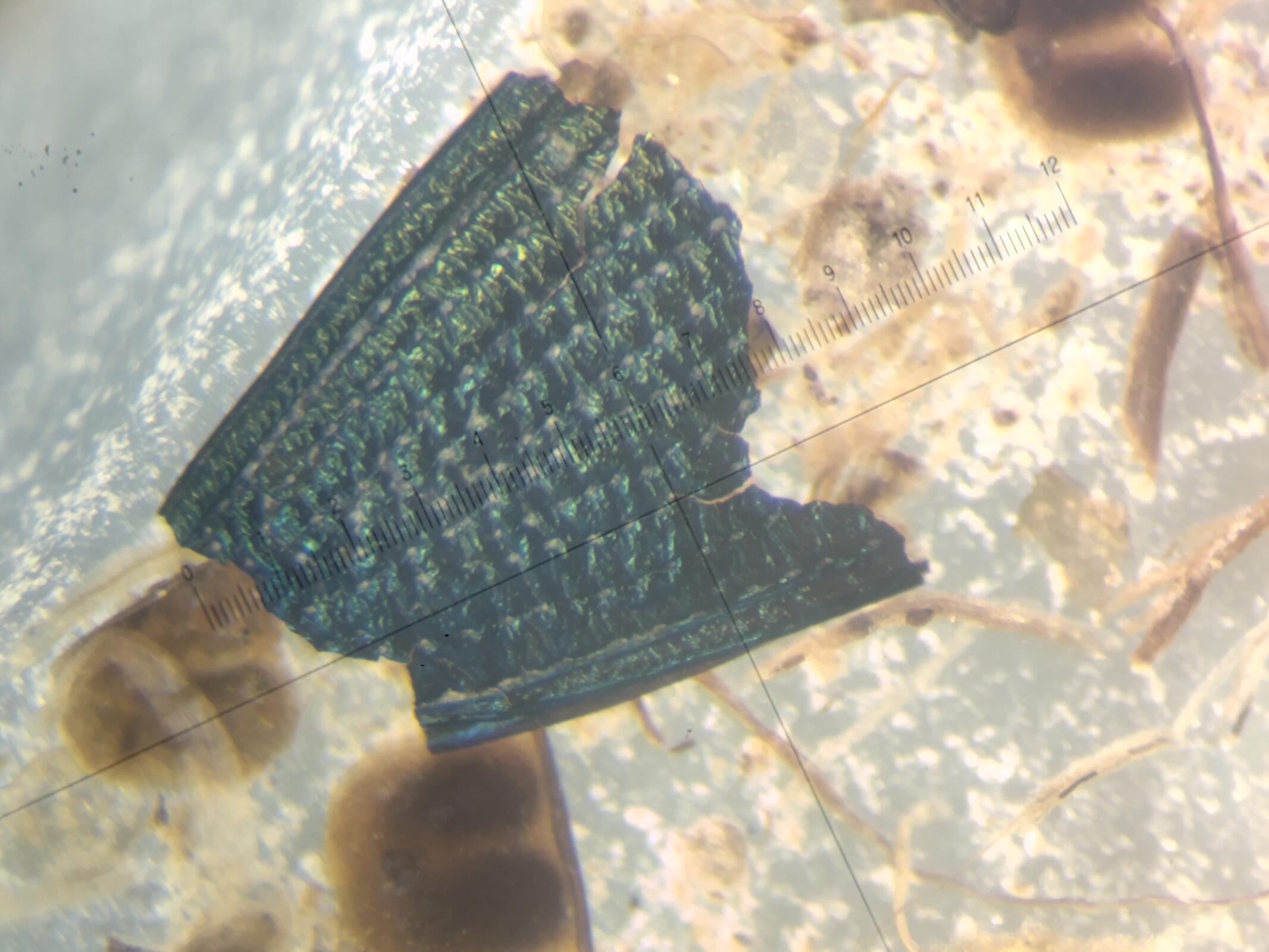
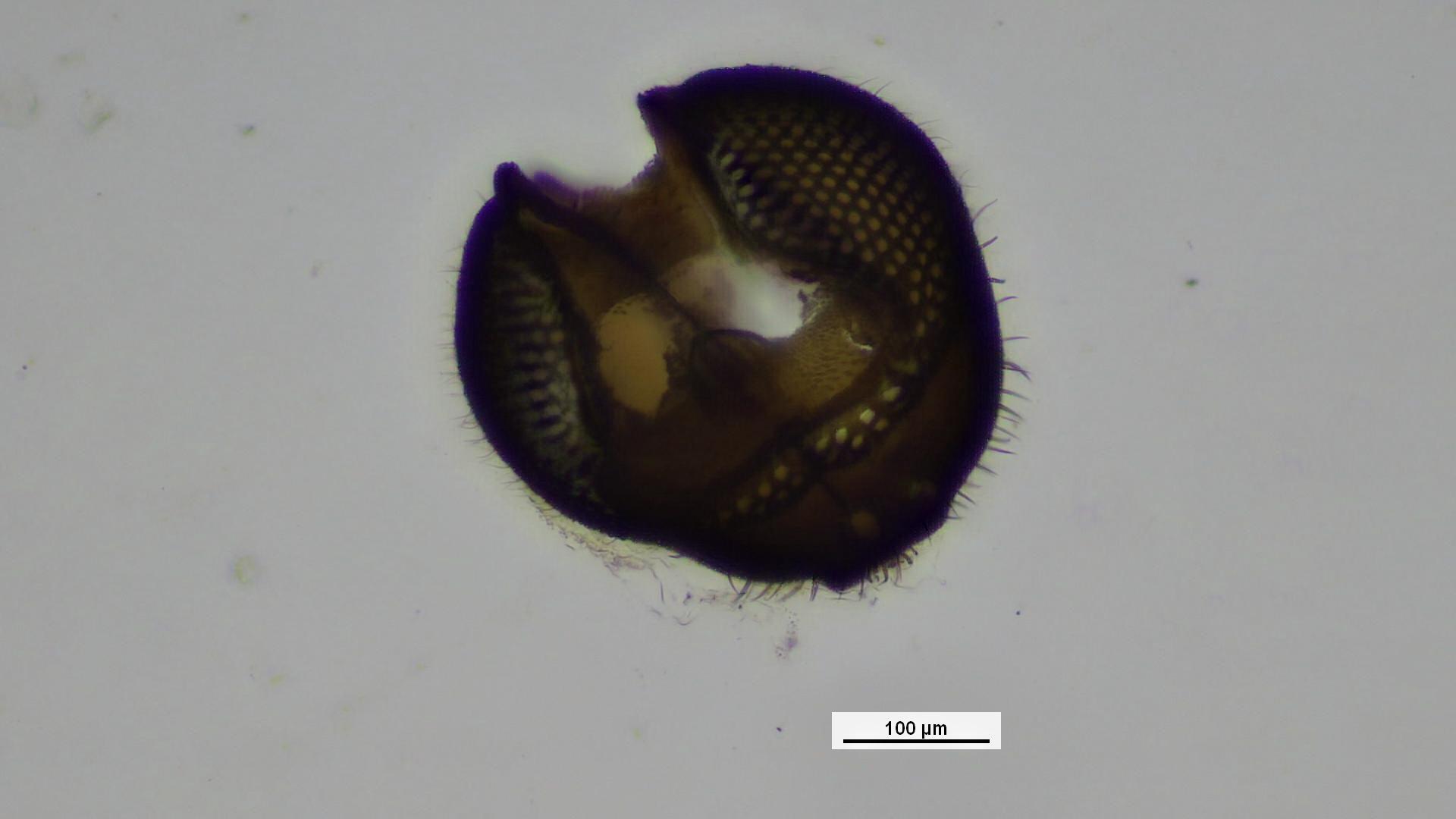
Two remains of animals larger than normally encountered - macroinvertebrates; an insect and a beetle. Note the wing case has retained it's metallic sheen for over 12,000 years.
Looking Ahead
These observations highlight that even when primary targets are absent, sediment samples contain rich ecological information. Future work will explore these biological indicators further, alongside targeted macrofossil and sedaDNA analyses.