Plant Macrofossils and Radiocarbon Dating
Published: February 2026
Identifying suitable material for radiocarbon dating in lake sediments
Radiocarbon dating is one of the key tools used in palaeoecology, but selecting suitable material from lake sediments is not always straightforward. Terrestrial plant remains are preferred because they take their carbon directly from the atmosphere, avoiding complications associated with aquatic carbon sources.
One of the tasks identified in 'The Next Six Months' was to identify suitable levels for radiocarbon dating and prepare samples for submission.
Plant macrofossils — visible remains of plants such as leaves, seeds, and fragments of wood — play a crucial role in palaeoecological research. Unlike microscopic proxies such as pollen, these remains can often be identified to a finer taxonomic level and, importantly, can provide material suitable for radiocarbon dating.
Establishing a robust chronology is fundamental to interpreting environmental change in lake sediment records. Radiocarbon dating offers a means of placing these changes in time, but the reliability of the resulting age–depth model depends heavily on the type of material selected for dating. The problem is twofold - how many dates are 'enough'? and what is available to provide the most robust date possible?
The first question is subject to two factors - how many dates can we afford? and what is the optimum number of dates we should aim at? This latter was the subject of an enquiry by Blauw et al (2018).
Blaauw and colleagues argue that robust age–depth models depend more on adequate dating density and Bayesian modelling than on a few highly precise radiocarbon dates. Their simulations suggest that increasing the number of well-distributed dates — roughly towards a minimum of two dates per millennium — substantially improves chronological reliability and reduces interpolation error in palaeoenvironmental records.
For robust dates, terrestrial plant macrofossils are generally preferred because they are less likely to be affected by reservoir effects that can bias ages derived from aquatic material.
In practice, however, finding suitable macrofossils is not straightforward. Over the past three weeks, I have spent far longer than anticipated examining the lowest metre of sediment from the core, carefully searching for identifiable terrestrial material. These sediments — likely deposited during the late glacial period — are often minerogenic and relatively poor in organic remains, making the recovery of suitable material both time-consuming and uncertain.
How Radiocarbon Dating Works
Radiocarbon dating is based on the decay of carbon-14 (¹⁴C), an unstable isotope formed in the upper atmosphere. Through photosynthesis, plants incorporate all isotopes of carbon, and once the plants die, the ¹⁴C isotope begins to decay. Measuring the proportions of the different isotopes tells us how much decay of ¹⁴C has occurred, and allows us to estimate the age of the material. The resulting date range is a range of probabilities of a date in that range being correct. However, the date range is generally reported as the date, + or - so many years, which is a great simplification.
Why Terrestrial Plant Material Matters
Terrestrial plants take their carbon directly from the atmosphere. In contrast, aquatic plants may incorporate “old” carbon dissolved in water, leading to inaccurate dates due to the reservoir effect. And between the two are the emergent plants, those that grow in water but have their tops - some more so than others - out in the open atmosphere. The crucial point here is that if we know the carbon has come from the atmosphere, as it does with terrestrial plants photosynthesising, then we know the carbon in the plant is fresh, taken in directly from the atmosphere and with the levels of carbon isotopes that relate directly to that time. With aquatic plants, and also emergent plants, all, or some, of the carbon is taken in from the water, and that carbon may have been out of the atmosphere and detached from the atmospheric carbon pool for any amount of time. Maybe millions of years if it originates from limestone. In these cases we can expect to see an older date because of the different ratios of carbon isotopes, but we have no idea where the carbon came from or how old it is, so the date becomes very questionable.
This is very clearly illustrated by the following comparison of macrofossils from the Finglas in Kerry.
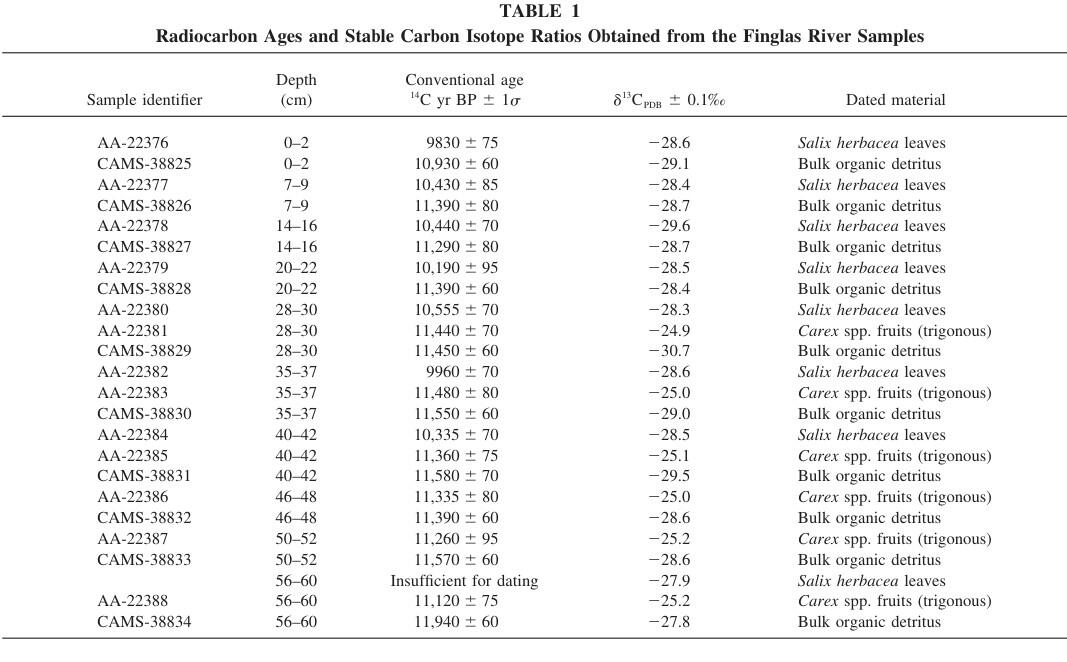
Radiocarbon Ages and Stable Carbon Isotope Ratios Obtained from the Finglas River Samples. This table is taken from Turney et al. (2000)
However, the fact is that it is not always possible to find macrofossils, or pollen, and it is necessary to send bulk sediment for dating. Strunk et al. (2020), in their paper Improving the reliability of bulk sediment radiocarbon dating discuss the ways that this can be undertaken.
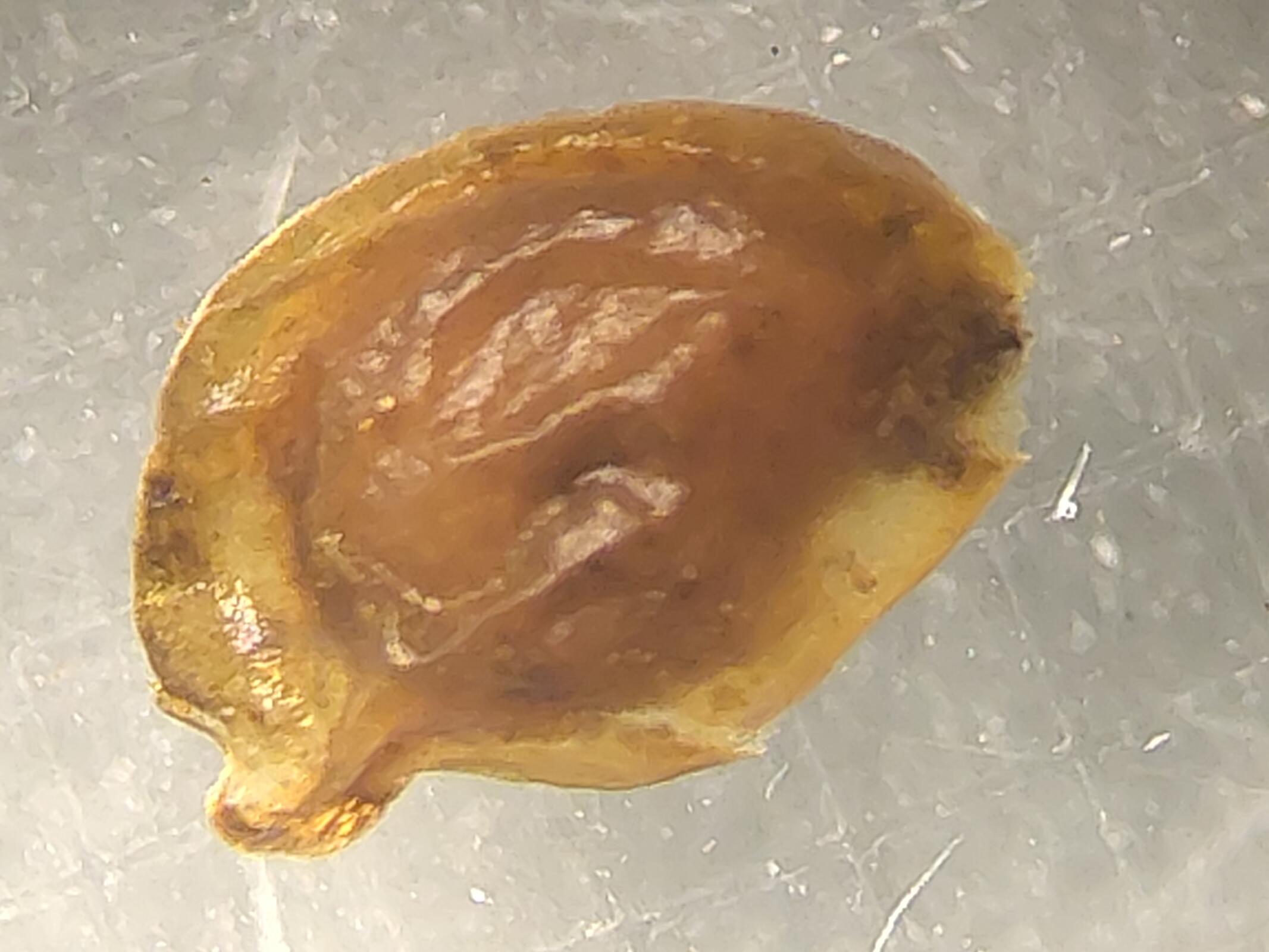
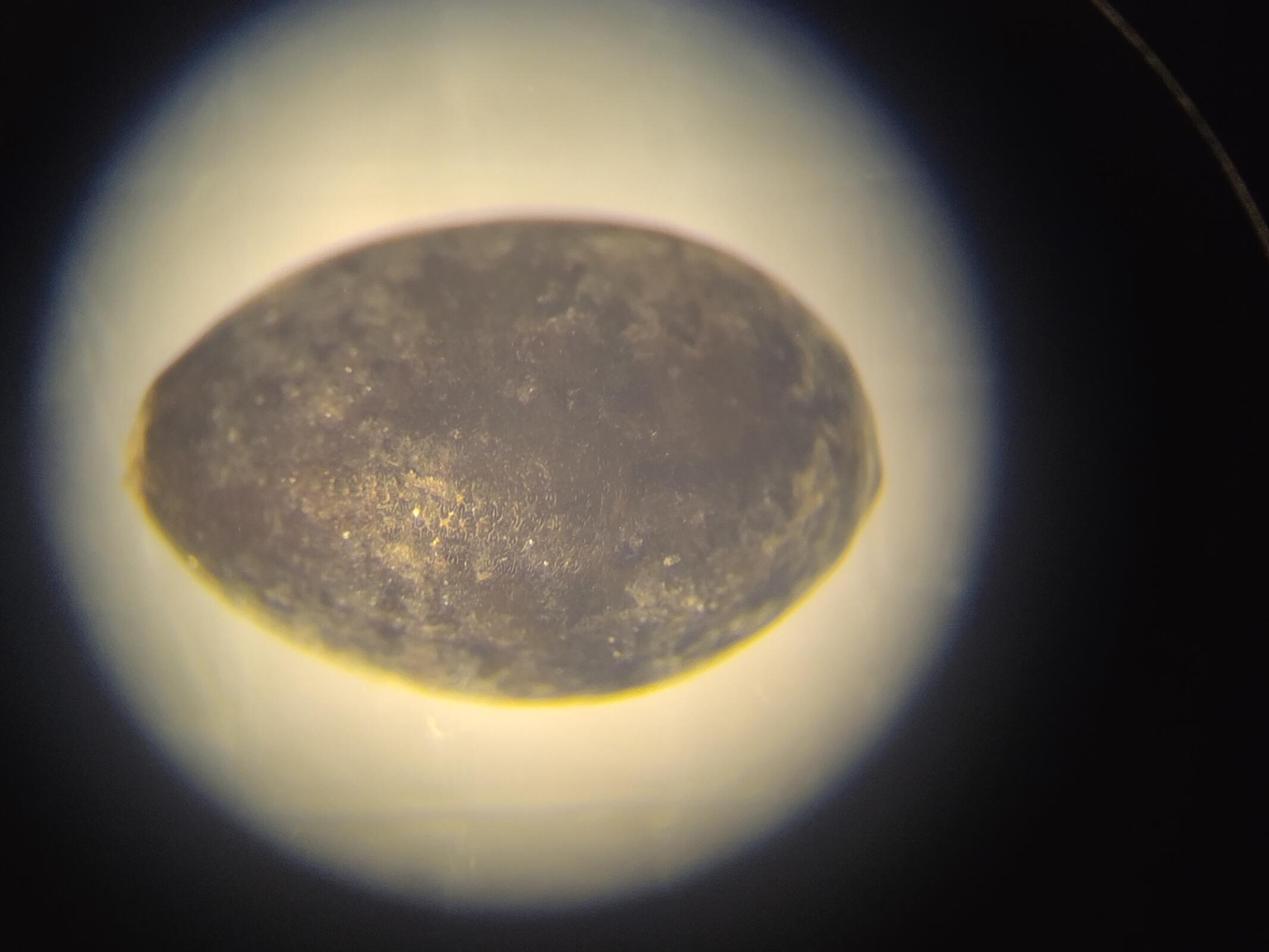
A Potamogeton (pond weed) seed (left) and a Nymphaea (water lily) seed (right) both from 458 cm depth.
Extracting Plant Macrofossils
Finding suitable material in sediments 10,000, 12,000 or even 15,000 years old is challenging. It may be necessary to select 1 cc, or 2, or even 5 or more. This is an important factor, because for each 1 cm slice of the sediment core the sediment is limited. And when it may be necessary to keep as much sample back as possible for other analyses, we have to gauge whether we can afford to carry on looking, or move to another level.
The process involves:
- Disaggregating sediment
- Wet sieving (~250 µm and ~90 µm)
- Microscopic examination
- Selecting identifiable terrestrial remains
Disaggregating sediment is done by soaking the sediment in deionised water. The water can be slightly warm, which helps, and the wet sediment can be stirred gently. If there are persistent aggrgations then a weak solution of NaOH or KOH can be used, but it is preferable not to use any chemicals. Most importantly is not to use any chemicals that contain carbon - obviously, from what has been written above. So no alcohols or carbonates etc. It must be borne in mind that the macrofossils we are looking for are going to be of a reasonable size, at least 0.5 mm, and maybe as much as 5mm, or more. So the disaggregation of sediment does not have to be complete, but the more that is achieved, the more that will pass through the sieves in the next step.
Wet sieving (we have sieves of 210µm and 90µm) the sediment when all the lumps have broken down makes the final task of searching for macrofossils so much easier. The sediment when sieved must be retained for later possible analysis of a different sort. In my case I sieved at 210µm, and I sat this sieve on top of a 90µm sieve. These both sat on top of a beaker.
This way I retained all sediment - except the very finest which found its way into the water and away as the beaker overflowed. The 90µm sieve retained material for chironomid analysis. So the 210µm caught potential macrofossils, and some large chironomid head capsules; the 90µm caught all the rest of the chironomids, and lots of other stuff; what fell through the 90µm might be of interest later - smaller diatoms, pollen, and some of the smaller NPPs. Although I do not currently plan on using any of these, I may choose to look out of curiosity.
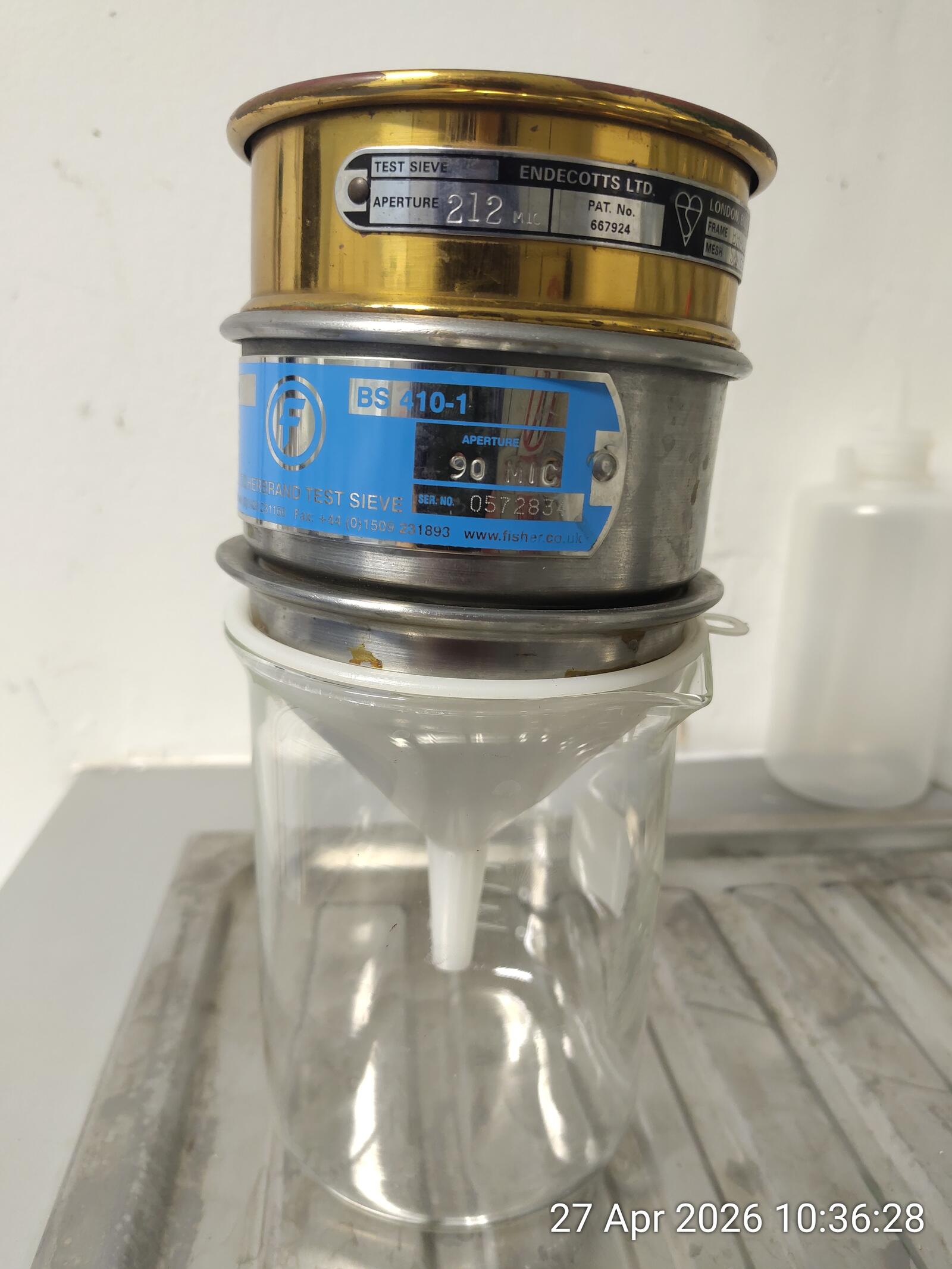
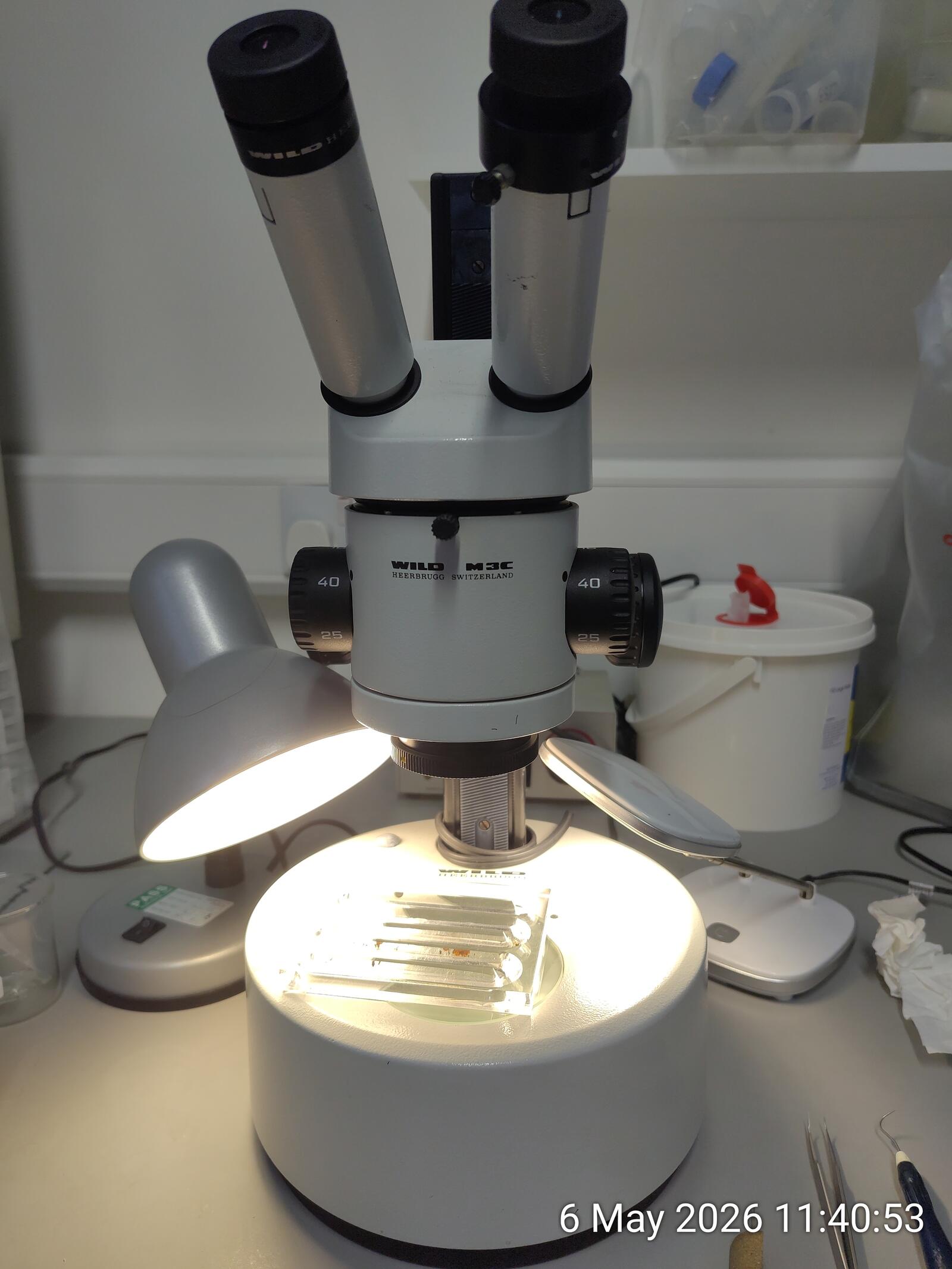
Sieve setup to catch macrofossils and keep sediment for later analyses (left); stereo microscope with top lighting used in the search for macrofossils (right).
Microscopic examination
Having sieved at 210µm this material was examined under a stereo-microscope at magnification of x25. I found it most beneficial to use top lighting so that I could see the features of the specimens I was examining. Lighting from underneath is fine for compund microscope specimens that are thin enough for the light to shine through, but with these larger specimens that would give more of a silhouette effect.
The macrofossils are generally about 0.5mm and larger, and quite easily seen, so the actual scanning of the material does not take too long, until something of interest is found. The decision then has to be made as to whether this is worth picking out. Bryony Coles says, 'If in doubt, pick it out'. With experience one soon comes to recognise some specimens that do not need to be picked, and also some that do. Once picked the individual specimens can be examined at a higher magnification if necessary.
Selecting identifiable terrestrial remains
There are some excellent resources to help with identifying remains. Predictably one of the most useful is that great book 'The History of the British Flora' by Sir Harry Godwin. Originally published in 1956 and a second edition published in 1975, there are several plates that provide very good guidance.
We must remember that the flora of the Late Glacial period was in many respects quite different to what we would expect to see nowadays, and a flora of the period is therefore invaluable to reduce the list of probable species to be found.
Many other papers by both Coxon and by West, and others, are very pertinent and well worth referring to. In the References section below I also give some webpages and books that provide some excellent macrofossil identfication resources.
For dating, the advice from Queen's University Chrono Centre is that approximately 3–10 mg of material is required.
What I Found (and Didn’t Find)
I found abundant plant fibres—long, ribbon-like fragments — but could not determine whether they were terrestrial, aquatic, or emergent.
I did find two beautiful specimens of large seeds (~5 mm) from 458 cm depth, just after the Younger Dryas (~11,700 years old). I believe one to be a Potamogeton seed (a broad leaved pondweed) and the other a Nymphaea (water lily) seed. This latter has beautiful reticulate markings on the coat - click on the image to magnify, they are pictured above. But they are both aquatic and unsuitable for dating.
A commonly occurring plant macrofossil in many samples from sites across Ireland is the black, shiny, broken, almost spherical seed coat of Chenopodium. Godwin discusses the presence of Chenopoium family seeds and pollen at some length; they appear to have been some of the first colonisers, often in great profusion. The preservation of these seed coats appears to be the result of a high concentration of tannin in them. Confirmation of the seed morpholoogy was derived from Sukhorukov and Zhang, (2013) and also from Langlie, (2019).
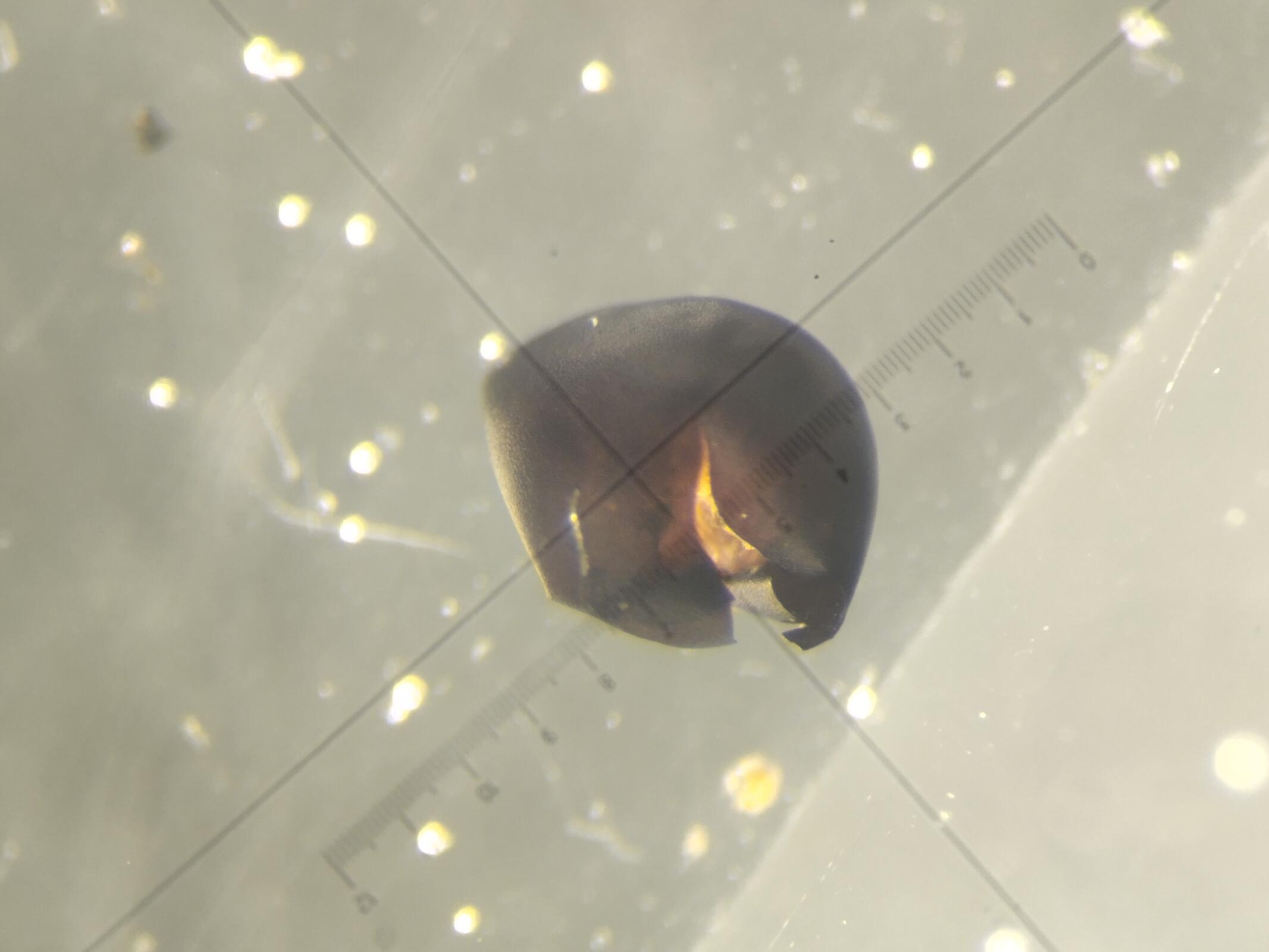
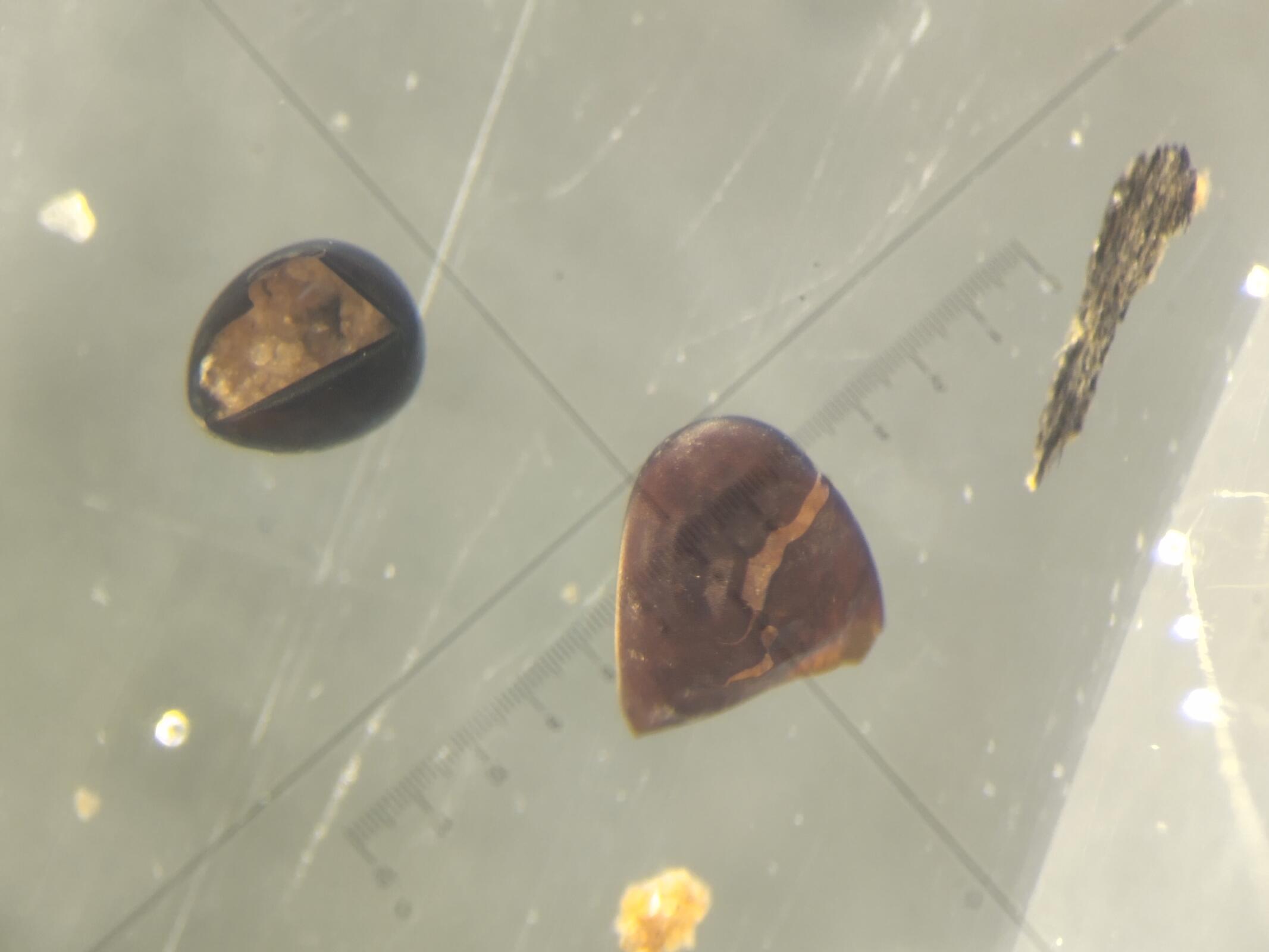
As can be seen from the image, these seed tests are very thin, break easily, and generally have a lot of sediment accumulated inside. They are difficult to clean (all sediment has to be removed from macrofossils, otherwise the date returned is more of a sediment date) and break easily. And they are so thin walled there is little material there to date.
In looking through pictures of seeds and other plant remains that may be found in sediment of this age, I became familiar with some of the shapes. When I came across some of these it was incredibly satisfying to have succeeded; humbling to realise I was looking at parts of plants that had grown in this place as much as 15,000 years ago; and frustrating to know that at that point I needed more to ensure enough for a sample that could be radiocarbon dated. Here are some of the more exciting remains that I found.
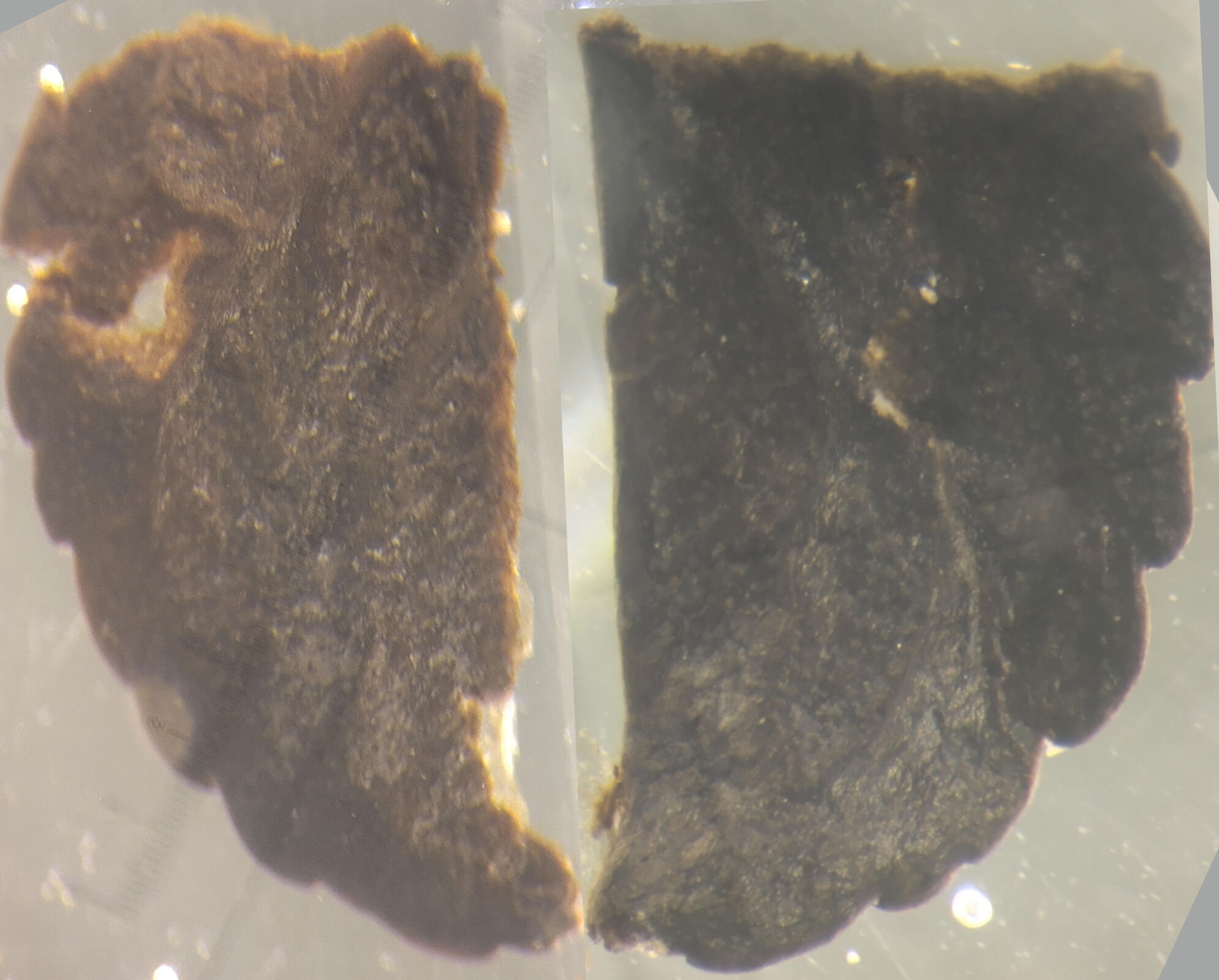
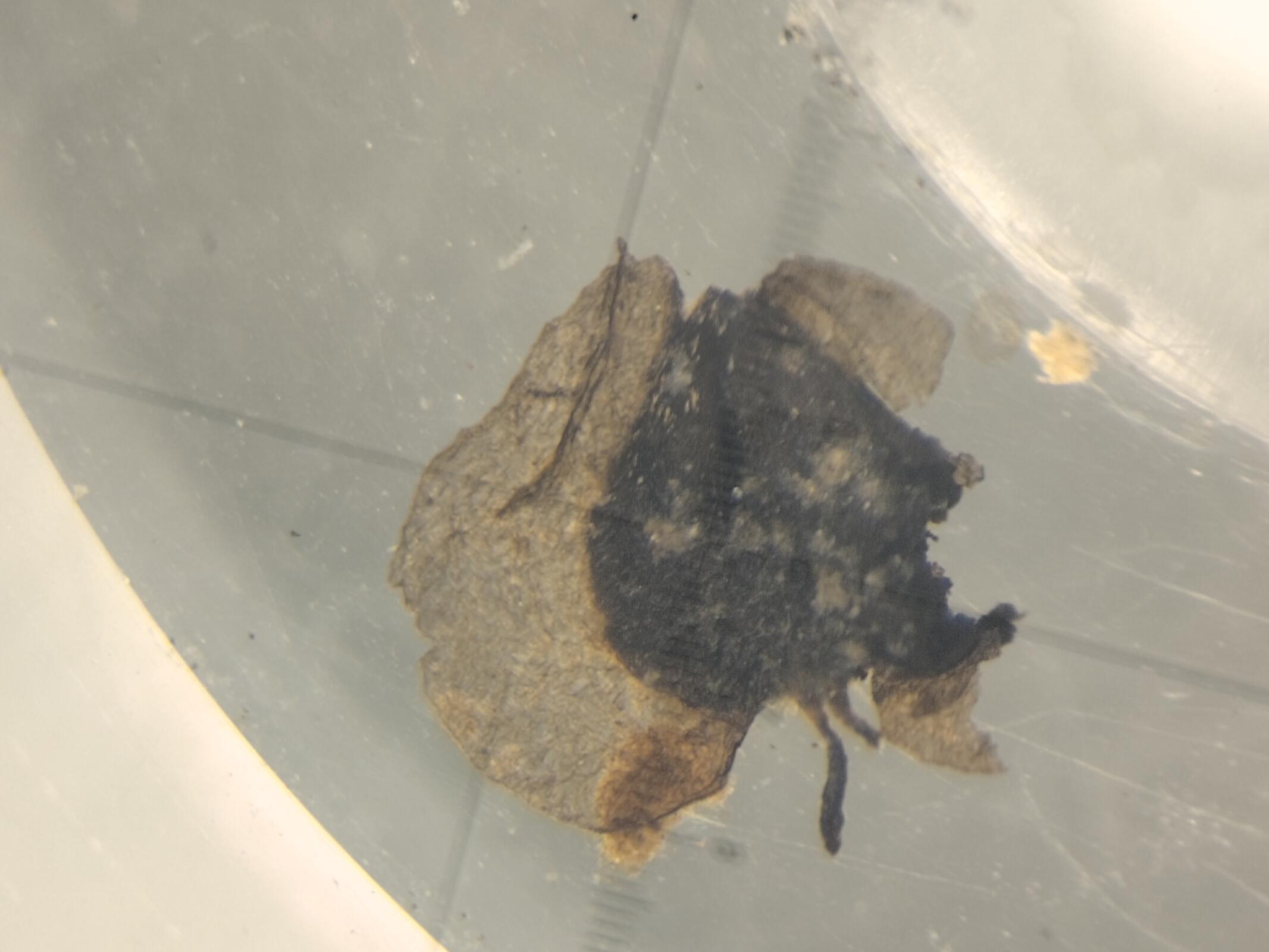
A leaf - probably Dryas octopetala - which broke in half (left) from 496cm depth, and a Betula seed (right - probably tree birch) from 531cm depth.
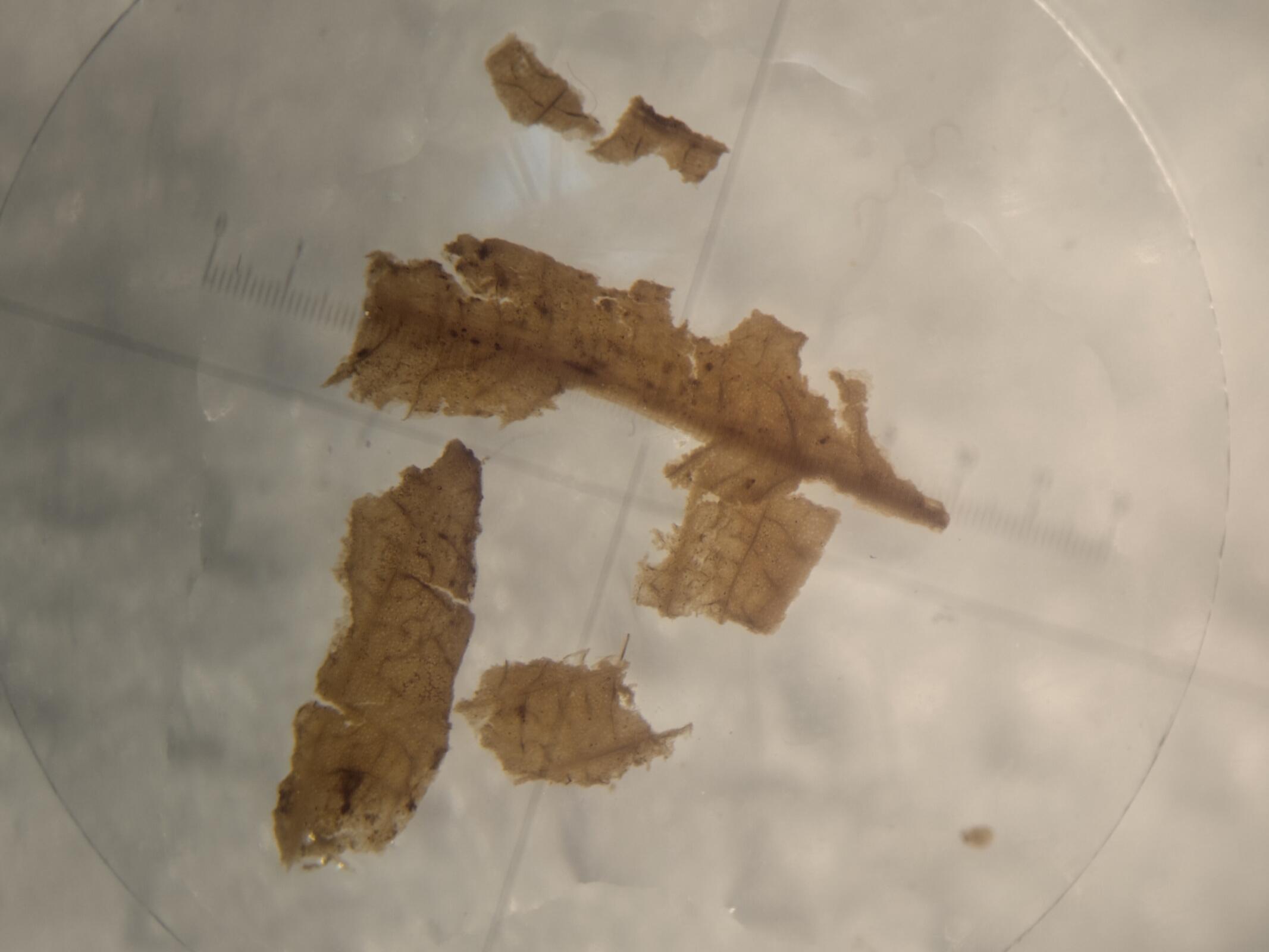
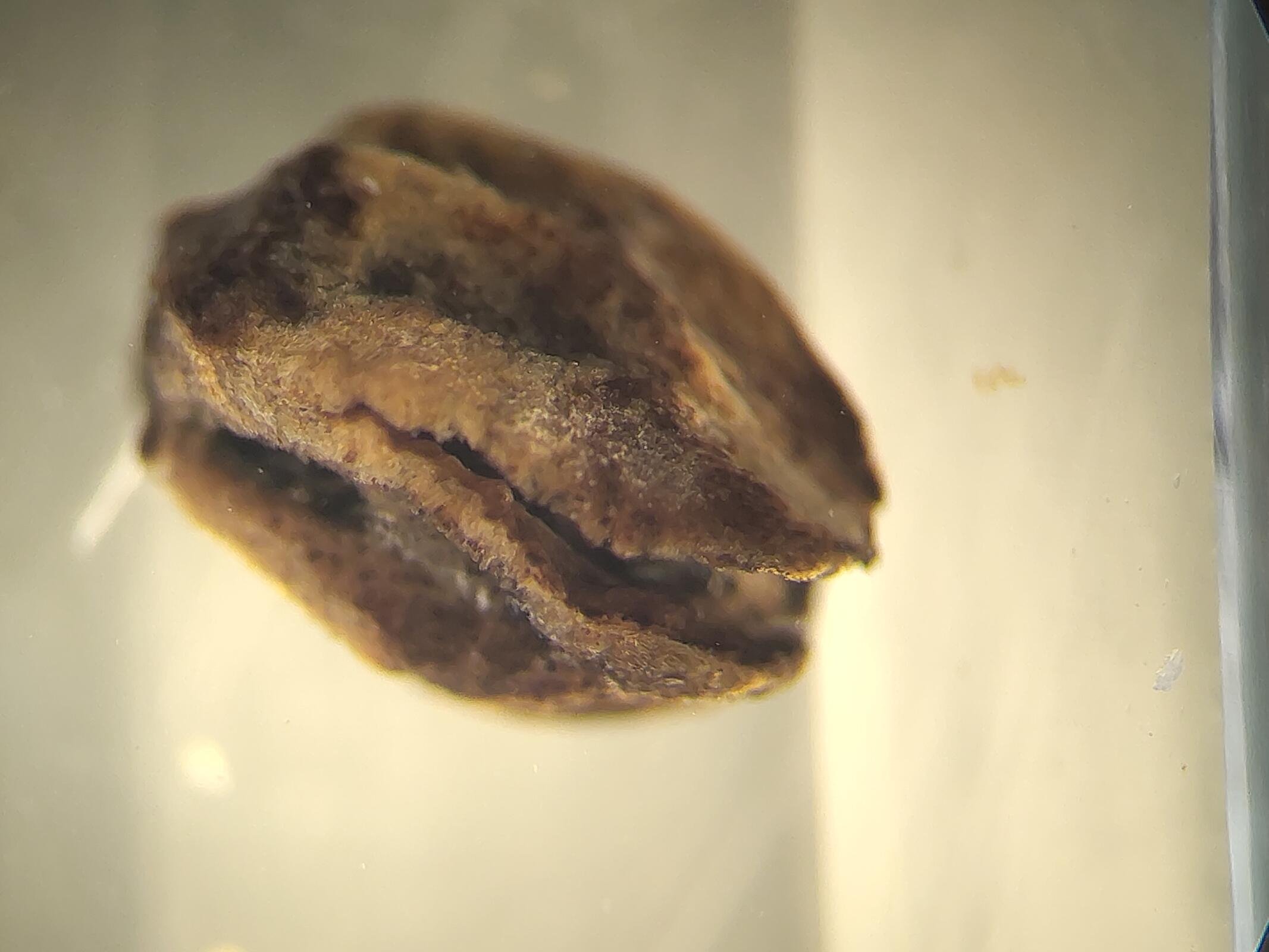
Some very fragile leaf fragments from 452 cm depth (left), and a Rumex seed from 529cm depth (right).
Fragile leaf fragments are especially valuable because their fragility means that they are very unlikely to have been deposited in the past, and then at some later point redeposited as sediment might have moved. So the date they were deposited most likely represents the date they were growing.
-large.jpg)
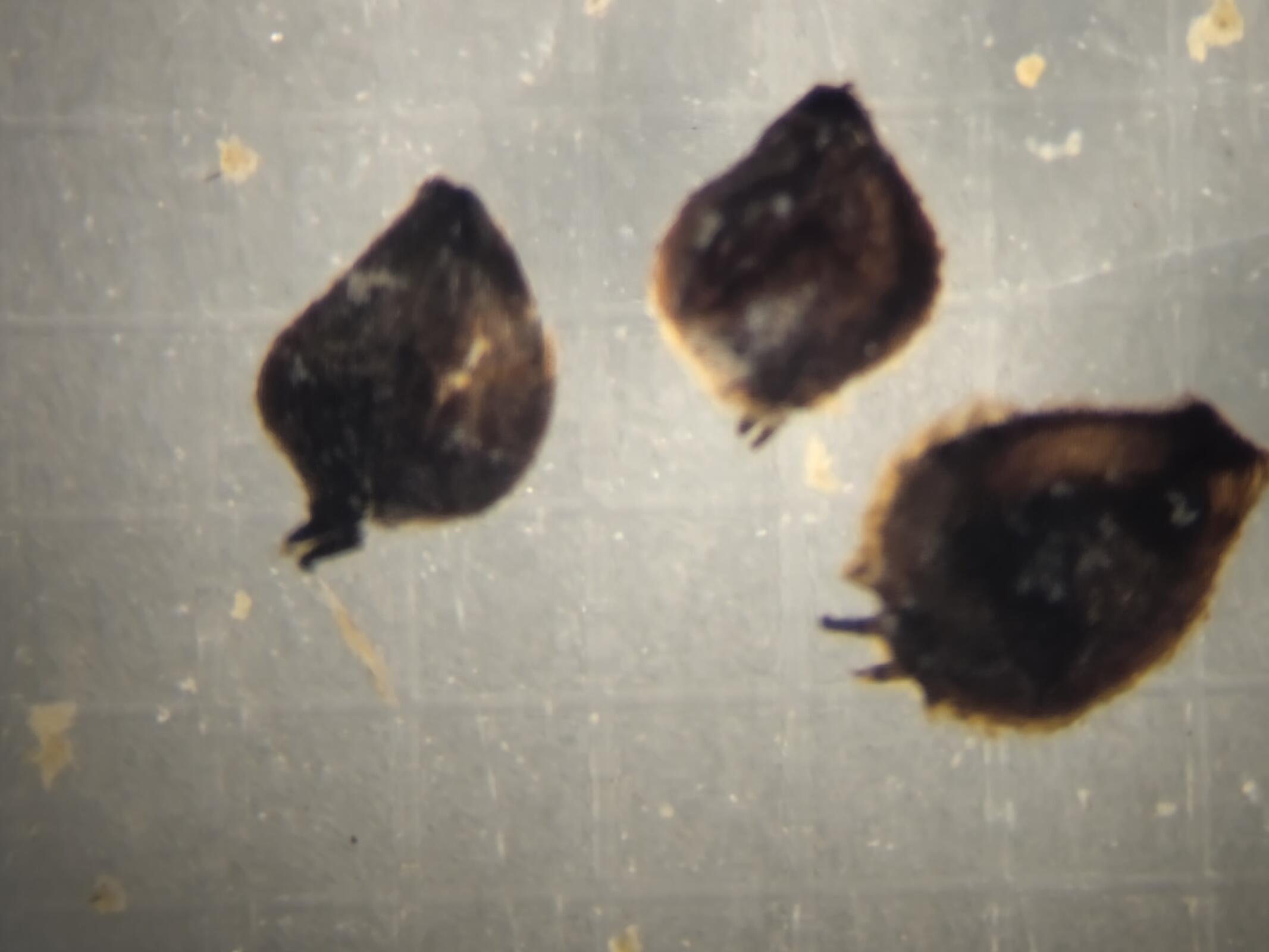
Six Betula (birch) seeds from very low down in the core - the third dark organic centimetre. This is probably early Late Glacial and thus likely to be Betula nana from 529cm depth. The shape and size is a little different from the larger more elongate seed above.
Given the cost of radiocarbon dating (~€300 per sample), this presents a dilemma. The alternative, bulk sediment dating, is possible but introduces uncertainty because we do not know where the carbon isotopes we use for dating have come from. An additional option, but involving some new techniques and one that is not widely practised, is the extraction and concentration of fossil pollen. A complex and delicate operation. For now, the priority remains to continue searching for identifiable terrestrial plant material.
Looking Ahead
This process has highlighted how critical, and how difficult, it is to obtain suitable material for dating. Further work will focus on extracting more macrofossils to get enough from each level to send off for radiocarbon dating. I shall post the results of that in due course.
In the blog Lateglacial Life and Sediments; When sediment colour hides rather than reveals biological activity I discuss the fact that although the sediment may not look very organic, and may appear to be almost totally mineral sediment, it does not necessarily reflect the environment. Think back to the meltwater river at Steindalsbreen, when we saw a river of meltwater gushing out of the snout of a glacier, and tumbling down through a Norwegian Birch and Alder woodland, heavy and milky with fine glacially scoured rock flour. I was surprised at the plant remains, like the Rumex seed and six Betula seeds, I found at what seemed to be the lowest level in the core that I would expect such remains to occur. Were these early colonisers in the late glacial landscape?
This work also revealed a range of other biological remains, discussed in this post, 'Unexpected Life in Late Glacial Sediments'.
References:
Blaauw, M., Christen, J.A., Bennett, K.D. and Reimer, P.J., 2018. Double the dates and go for Bayes—Impacts of model choice, dating density and quality on chronologies. Quaternary Science Reviews, 188, pp.58-66.
Coxon, P. and Waldren, S., 1995. The floristic record of Ireland’s Pleistocene temperate stages. Geological Society, London, Special Publications, 96(1), pp.243-267.
Dixon, C. A. 1970. The Study of Plant Macrofossils in British Quaternary Deposits. In Walker D. and West R. G. 1970. Studies in the Vegetational History of the British Isles. Cambridge University Press.
Langlie, B.S., 2019. Morphological analysis of Late Pre-Hispanic Peruvian Chenopodium spp. Vegetation History and Archaeobotany, 28(1), pp.51-63.
Strunk, A., Olsen, J., Sanei, H., Rudra, A. and Larsen, N.K., 2020. Improving the reliability of bulk sediment radiocarbon dating. Quaternary Science Reviews, 242, p.106442.
Sukhorukov, A.P. and Zhang, M., 2013. Fruit and seed anatomy of Chenopodium and related genera (Chenopodioideae, Chenopodiaceae/Amaranthaceae): Implications for evolution and taxonomy. Plos One, 8(4)
Turney, C.S., Coope, G.R., Harkness, D.D., Lowe, J.J. and Walker, M.J., 2000. Implications for the dating of Wisconsinan (Weichselian) Late-Glacial events of systematic radiocarbon age differences between terrestrial plant macrofossils from a site in SW Ireland. Quaternary Research, 53(1), pp.114-121.
The Digital Plant Atlas at the rijksuniversiteit groningen.
The Tool for Microscopic Identification at the University of Minnesota
Zadenatlas der Nederlandische Flora - Ten Behoeve van de Botanie, Palaeontologie, Bodemcultuur en Warenkennis, by W. Beijerinck. Published by H. Veenman and Zonen. 1947. a superb book of drawings of seeds from plants found in the Netherlands. Obtainable through inter-library loan.